Journal
Notes on ambition
Four short essays on attention, surroundings and the quiet decisions behind a life worth building.
No. 01
The psychology of your surroundings
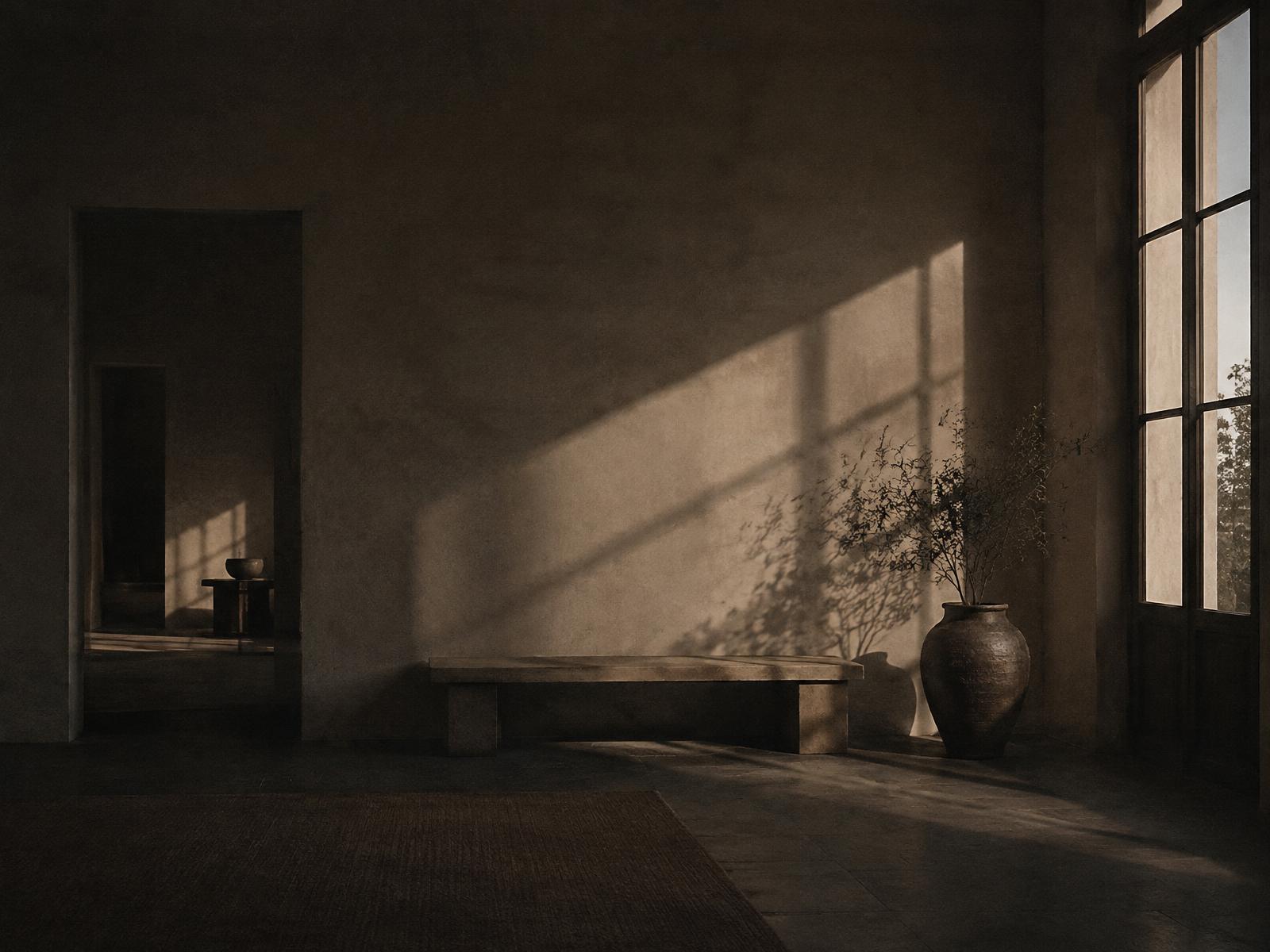
Rooms are not neutral. They rehearse a version of you every single day.
4 min read · 3 chapters
Think about the places where you spend most of your time.
The desk where you work. The room where you unwind. The place where you begin each morning and return to at the end of the day. You probably know these spaces well enough to move through them without thinking.
But familiarity does not mean they have no influence on you.
The way a room is arranged affects what feels easy, what demands effort and how you tend to use your time. A phone on your desk makes distraction convenient. A clear working surface makes it easier to begin a task. A comfortable chair by a window can make a quiet moment feel more inviting than another hour in front of a screen.
None of these details decides what you will do. Together, however, they shape the conditions in which you make your decisions.
The influence of the everyday
We often think of our habits as the result of personal discipline. We focus on making better decisions, becoming more consistent and finding the motivation to do the things we know matter.
Yet the same decision can require very different amounts of effort, depending on the circumstances.
A space that supports concentration removes some of the friction involved in getting started. A room designed for rest makes it easier to step away from work. When the objects around us have a clear purpose, we spend less time navigating unnecessary distractions.
These are small advantages, but daily life is largely made up of small things repeated.
Over time, the way a room functions can become part of the way we function within it. We begin to associate certain places with certain activities. Sitting at a particular desk becomes the beginning of the working day. Entering the bedroom becomes a signal to slow down.
The space does not create the habit on its own. It sets the circumstances in which the habit takes place.
What your space makes possible
Consider how differently you might approach the same afternoon in two different environments.
In one, everything competes for your attention. There is unfinished work within sight, a phone that keeps lighting up and little room to think. In the other, the essentials are within reach, distractions are less immediate and the next task feels easier to begin.
The work itself has not changed. The conditions have.
This is why being intentional about a space is not simply a matter of interior design. It is also a way of deciding how you want to spend your time.
What should this room make easier? What belongs here? What could be removed, rearranged or introduced to make the space better suited to the life you want to lead?
The answers will differ from one person to another. A productive workspace does not need to look like a minimalist studio, just as a restful home does not need to follow a particular aesthetic. The point is to understand what works for you, rather than copying a room that looks good in a photograph.
Beyond appearance
A room can be beautiful without being useful, just as a practical room can function perfectly well without feeling personal.
The most considered spaces bring these qualities together. Their appearance serves a purpose, and their contents feel as though they belong.
That does not require a complete renovation or expensive furniture. It begins with paying attention to the things you already live with. How you use the space. What interrupts you. What puts you at ease. What deserves more room.
Once you understand how a space supports your daily life, the next question becomes more personal.
Not simply how you want a room to look, but what you want it to stand for.
Because the places we return to every day are not separate from the lives we build. They are where much of that life actually happens.
No. 02
Why the things you see every morning matter
A small reminder can bring a bigger ambition back into focus.
6 min read · 5 chapters
There is a difference between knowing what you want and keeping it present in your daily life.
You can have a clear ambition, a plan for the future and every intention of following through. Then the ordinary demands of the day take over. Work needs to be done. Messages need answering. One week becomes another, and the things that once occupied your thoughts begin to feel further away.
The ambition is still there. It simply has less room in your attention.
This is one reason the things we choose to keep in sight can matter.
A thought worth returning to
Most meaningful goals require more than a single decision.
Starting a business, developing a skill, becoming better at your work or creating more independence all take time. Progress is rarely a continuous feeling of excitement. There are periods when the reason for doing something feels obvious, and others when the immediate effort makes it harder to see the bigger picture.
In between those moments, reminders have a place.
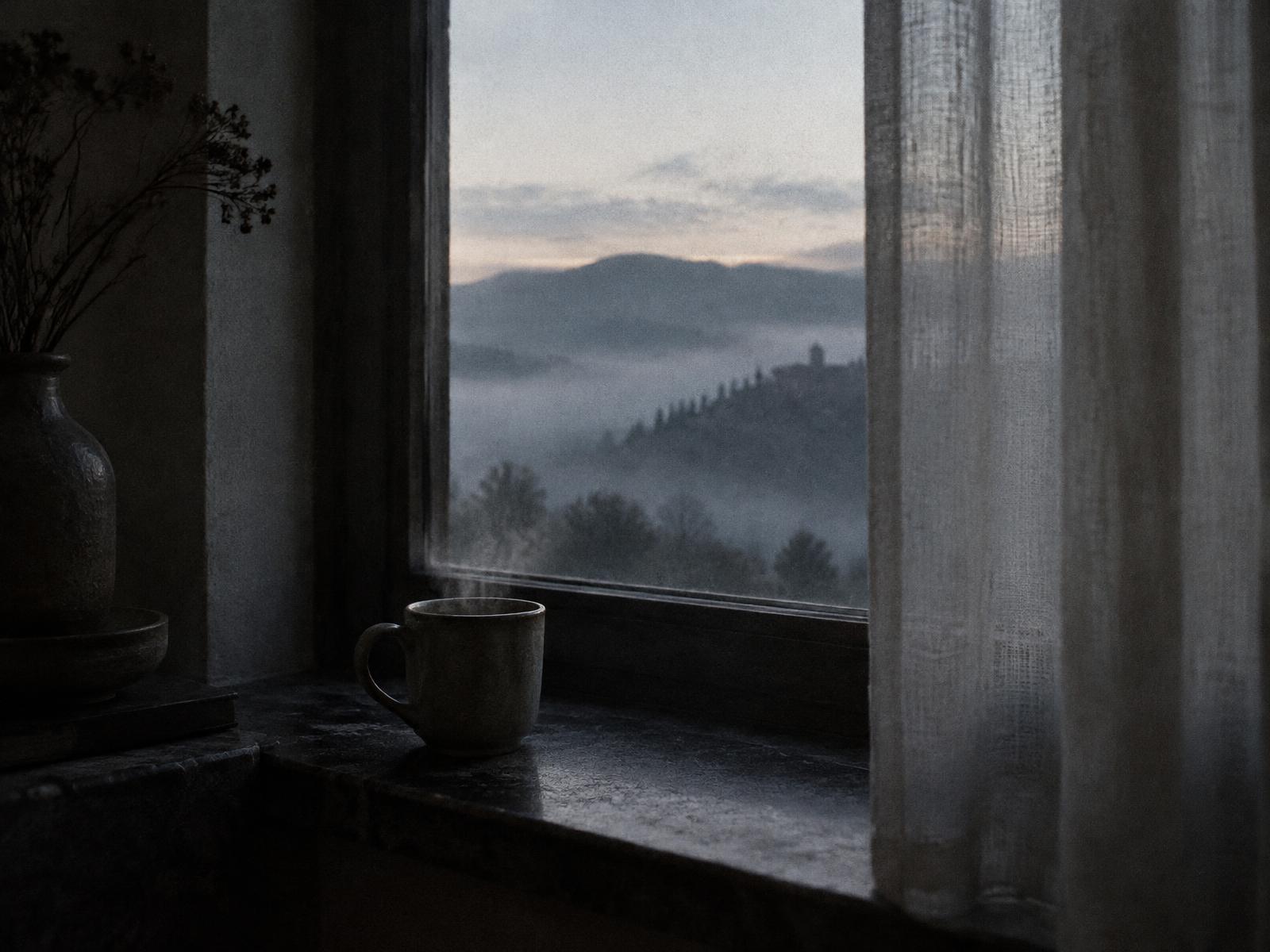
A sentence you encounter on an ordinary morning might bring back a principle you wanted to live by. An image might represent a destination, a possibility or a version of your future that still matters to you. It may take only a moment to notice it, but that moment gives an important thought the space to return.
What you repeatedly bring to mind can become part of how you approach the decisions in front of you.
Not because a thought automatically produces action, but because it gives you something to consider when choosing what to do next.
From intention to action
Imagine seeing the same words above your desk each morning.
At first, you might read them carefully. After a while, they become familiar. Most days, you may barely notice them. Then, on a day when you are tempted to postpone something important, the words catch your attention again.
They do not complete the task for you. They do not remove the difficulty or guarantee that you will make the right decision.
But they may remind you of a decision you have already made.
Perhaps you decide to begin rather than wait for the perfect moment. Perhaps you return to a task after losing focus. Perhaps you remember that the uncomfortable part of the process does not mean you are on the wrong path.
The outcome still depends on what you do. The reminder simply brings the original intention back into the moment when it can matter.
That is a modest role, but a useful one.

Choose what you want to be reminded of
Not every message deserves a place in your daily surroundings.
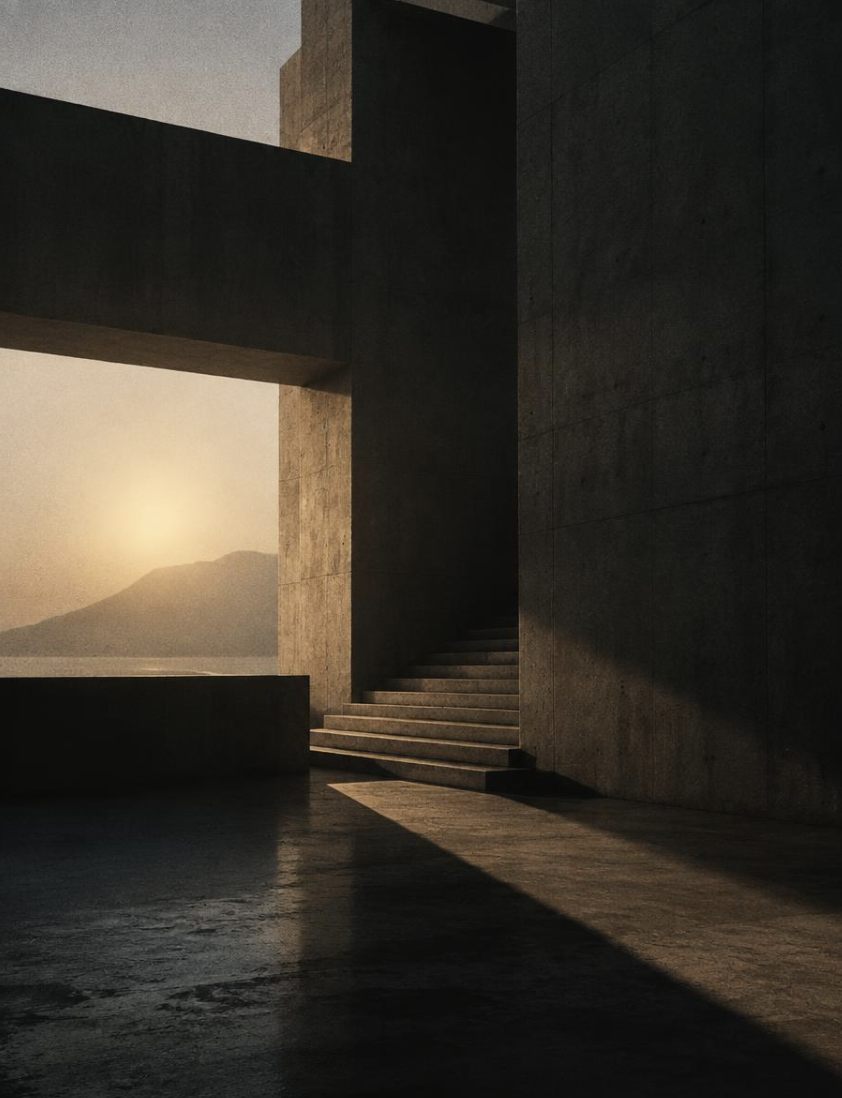
Some images are attractive without meaning very much to you. Others stay with you because they represent something personal. A landscape might remind you of the freedom you want to create. An architectural photograph might reflect your appreciation for precision and restraint. A few words might capture a standard you want to hold when circumstances make it tempting to compromise.
The right choice is not necessarily the most dramatic image or the most powerful-sounding quote. It is the one that connects with something you genuinely care about.
That connection is what gives a reminder its meaning.
It also explains why the same image can mean very different things to different people. One person sees a road disappearing towards the horizon and thinks of adventure. Another sees possibility, independence or the courage to begin again.
The image stays the same. The reason for choosing it belongs to the person looking at it.
Make the reminder part of your world
There is something different about encountering an idea in the middle of everyday life, rather than searching for it only when you need inspiration.
A book can be left open on a desk. A photograph can occupy the wall you see when you enter a room. A carefully chosen print can become a familiar part of the place where you work, think and make decisions.
It does not need to demand attention. In fact, the most effective reminder may be the one that belongs naturally in your surroundings, ready to be noticed without interrupting everything else.
The purpose is not to turn your home into a collection of motivational slogans. Nor is it to expect every morning to begin with a surge of ambition.
It is to give something important a visible place in your life.
What stays with you
Eventually, the day will become busy again. The difficult tasks will still be there, and the decisions that shape your future will still be yours to make.
A photograph cannot replace effort. A sentence cannot substitute for discipline. But what you see can influence what you think about, and what you think about can become part of the choices you make.
That is why a piece of art can be worth choosing for more than its appearance.
It can represent a direction you have chosen, a standard you believe in or a future you are willing to work towards. Something to live with, rather than simply look at.
Choose it because it means something to you.
Then give it a place where it can remain part of your everyday life, long after the moment of inspiration has passed.
No. 03
Designing a room around ambition
Scale, placement, light and restraint. How to choose a piece that belongs.
6 min read · 7 chapters
A piece of art can change the feeling of a room without changing anything else in it.
It can give an empty wall a purpose, introduce contrast to a quiet interior or bring together colours and materials that would otherwise feel disconnected. But the difference between a piece that looks good on its own and one that works in a room often comes down to proportion and placement.
Choosing the right artwork is only the beginning. How you present it determines how it becomes part of the space.
Start with the space
Before choosing a print, consider the wall where it will hang.
Look at its width, the furniture beneath it and the distance to windows, doors and corners. A large wall above a desk can carry a different scale from a narrow section beside a doorway. The artwork should relate to its surroundings rather than compete with them.
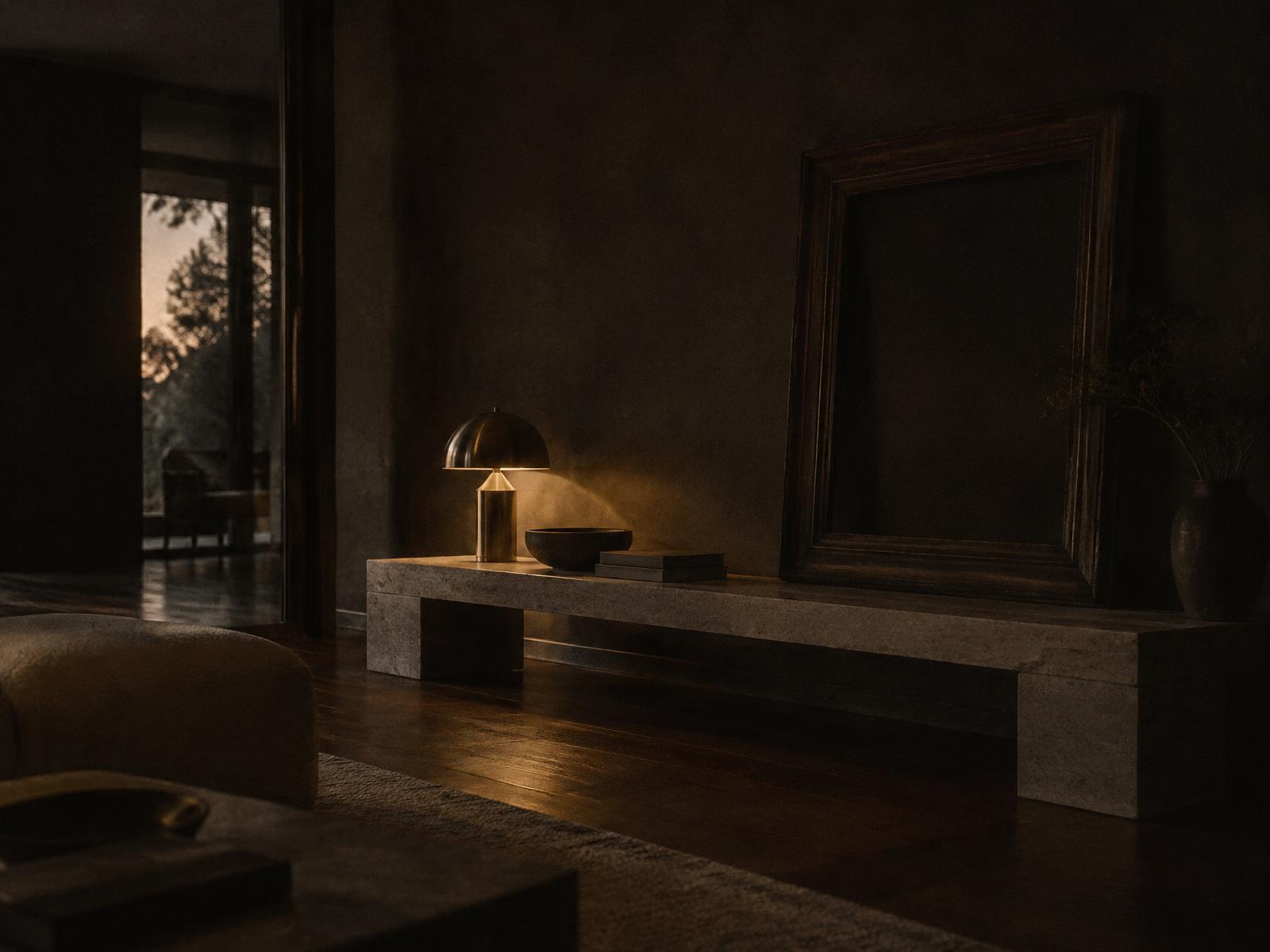
Above a sofa, console or desk, a useful starting point is a piece around two thirds of the furniture's width. It is not a strict rule, but it helps establish a balanced composition.
For a wall without furniture, pay attention to the surrounding architecture and the amount of empty space available. A larger print may give the room a clearer focal point, while a smaller piece can work well when there are other elements nearby.
The objective is not to fill as much wall as possible. It is to make the scale feel deliberate.
Give the artwork room to breathe
A common mistake is choosing a print that is too small for its setting.
On a screen, the image may appear substantial. Once hung on a large wall, it can feel disconnected from the furniture around it. Before deciding on a format, measure the available space and mark the proposed dimensions with painter's tape.
Step back. Look at the outline from the doorway, from your desk or from the place where you usually sit. Consider how the piece will look from the positions you actually occupy throughout the day.
The difference between a 30 × 40 cm print and a 70 × 100 cm piece is not simply the amount of wall it covers. It changes how the artwork relates to the room.
A smaller format can feel understated and personal. A larger one establishes a stronger focal point. Neither is inherently better. The right choice depends on the space and the effect you want to create.
Remember to account for the frame when measuring. The finished dimensions will be larger than those of the print itself.
Find the right height
Artwork is often hung higher than it needs to be.
A useful starting point is to place the centre of the piece around 145 to 155 cm above the floor. This tends to bring the image close to eye level for a standing viewer.
Above furniture, the relationship changes slightly. Leaving roughly 15 to 25 cm between the bottom of the frame and the furniture is a good starting point, depending on the proportions involved.
These measurements are guidelines, not rules. High ceilings, low furniture and unusually large prints may call for a different approach.
What matters is that the artwork feels connected to the room. A piece hung too high can appear detached from the desk or sofa beneath it. One positioned too low may feel cramped.
Mark the intended position before drilling. A few minutes spent checking the arrangement from different angles can make a considerable difference.

Pay attention to light
Light affects both the artwork and the atmosphere around it.
Natural daylight can bring out subtle details, while warm artificial light creates a more intimate setting. Consider how the image looks throughout the day, especially if the room receives strong sunlight.
Prolonged exposure to direct sunlight can contribute to fading, depending on the paper, inks and protective materials. Pigment inks offer good light resistance, but no print should be assumed to be immune to damage.
If the work is framed behind glass, check for reflections from windows and overhead lighting. A small change in position can make an image much easier to appreciate.
The aim is not to turn your home into a gallery. It is to let the artwork look its best within the conditions of the room.
Let the frame support the image
A frame should work with the artwork rather than compete with it.
Black oak gives architectural photography a clear outline and brings definition to a neutral interior. Natural oak adds warmth and sits comfortably alongside timber, stone and softer materials. Brushed brass introduces a different character, creating contrast when the surrounding details support it.
Look at the furniture, lighting and existing finishes before making a decision. They do not need to match exactly, but they should feel considered together.
The width of the frame matters as well. A slim profile preserves the lightness of an image, while a more substantial frame gives a large print greater presence.
Whenever possible, judge the complete framed piece rather than choosing a finish by its name alone. The combination of image, frame and wall determines the final result.
Know when to stop
A well-designed room is not necessarily a room with more things in it.
Once the artwork is in place, give it space. Avoid adding objects simply because the wall or the surrounding furniture still feels empty. Sometimes a single, carefully chosen piece provides more character than several competing elements.
This is particularly true in a workspace, where screens, books and everyday essentials already occupy much of your visual attention. A considered print can introduce personality without making the room feel crowded.
Think about the relationship between the artwork and the rest of the room. Its colours, scale and position should make sense together. The objective is not perfection, but coherence.
Choose with intention
The most successful interiors are not necessarily the most expensive or the most carefully styled. They are spaces in which the individual choices feel as though they belong.
A piece of art should work visually, but appearance is not the only consideration. You may be drawn to a particular image because of its composition, its atmosphere or what it represents to you.
Both matter.
Choose something that suits the room and that you will still appreciate when the furniture is familiar and the novelty of the arrangement has passed. Give it the right scale, the right position and enough space to stand on its own.
The result does not need to be dramatic.
It simply needs to feel considered, both in the space it occupies and in the reason you chose it.

No. 04
The meaning behind Leave the Shore
The horizon is not a promise of what lies ahead. It is an invitation to move towards it.
5 min read · 4 chapters
The shore is a familiar place.
It is where the land ends and the water begins. From there, the horizon is visible, but everything beyond it remains uncertain. You can look towards it, imagine what lies on the other side and wonder what it might take to get there.
You can also stay where you are.
There is comfort in the familiar. You know the ground beneath your feet, the surroundings you understand and the limits of what you can see. Leaving means accepting that the next part of the journey cannot be known in advance.
That is the idea behind Leave the Shore.
The decision to move
Ambition often begins with a quiet realisation that something else is possible.
A different direction. A higher standard. A life a little closer to the one you have imagined for yourself. The details are personal, but the moment is familiar: you begin to see the distance between the life you have and the one you would like to build.
Knowing the difference is one thing. Acting on it is another.
There is rarely a perfect moment to begin. The work can be uncertain, the path unclear and the distance between where you stand and where you want to go difficult to measure.
Eventually, the decision becomes less about knowing exactly what lies ahead and more about being willing to take the next step.
Leaving the shore is a metaphor for that decision. Not the promise of a particular destination, but the willingness to move towards something that matters to you.
What ambition asks of you
The horizon is easy to admire from a distance.
The journey towards it is made of different things. Time, patience, difficult decisions and the willingness to continue when progress is less visible than you hoped.
Ambition is often associated with the outcome. The business built, the skill mastered, the independence achieved. Yet much of what makes those outcomes possible happens far from the final result.
It happens in the ordinary hours. In the work repeated when there is little recognition. In the decision to begin before you feel entirely ready, and in the decision to continue once the initial excitement has faded.
There is no single definition of success, and no single destination worth pursuing. What matters is knowing what you value and being prepared to act on it.
The horizon gives you a direction. The journey remains your responsibility.

Why Leave the Shore exists
Leave the Shore began with a simple idea: the things we choose to live with can carry meaning beyond their appearance.
The prints were created around images and ideas that represented something worth keeping in view. What began as a personal choice gradually became a collection for others who connected with the same intention.
The aim is not to tell people what success should look like. Nor is it to promise that a particular object will change a person's life.
It is to create artwork that combines a considered visual identity with a meaning that can be personal to the one who chooses it.
Some pieces speak through words. Others rely entirely on the image. A distant horizon, a quiet architectural detail or a scene captured at a particular moment leaves room for an interpretation of your own.
The collection is built around that distinction. The work should earn its place in the room because it looks right there, and a reason to remain because it means something to you.
Neither quality needs to announce itself.
More than a destination
The name Leave the Shore is not an instruction to abandon everything familiar, or to spend every waking hour chasing the next achievement.
Sometimes moving forward requires persistence. Sometimes it requires patience, a change of direction or the recognition that a particular destination no longer matters in the same way.
The important part is the decision to live deliberately, rather than simply follow the path of least resistance.
A horizon can mean different things to different people. It may represent freedom, achievement, independence or the possibility of something not yet fully defined. It does not need to be the same for everyone.
What matters is having something of your own to move towards.
That idea is at the centre of Leave the Shore. The work is made for people who value the process as much as the destination, and who understand that the life they want is shaped by the choices they make along the way.
The shore will always be there. Familiar, recognisable and easy to return to.
But there is a difference between knowing what lies behind you and deciding that it is all there will ever be.
Sometimes the first step is simply looking towards the horizon, and choosing to go.